Conservative leaning papers
- Daily Express (populist)
- Daily Mail – voice of the suburban middle class
- Daily Telegraph – socially conservative
Labour/Lib Dem leaning papers
- Daily Mirror
- Guardian – metropolitan left
- Sunday People
- Observer
- Sun (flip flop)
Centre-left/pro business
- Economist
- FT
Influence on elections
-
-
Sun famously claimed they won the election for John Major in 1992
-
They later denied having such influence
“Anti-democratic is too strong a word…it was tasteless and wrong for us. It was wrong in fact. We don’t have that sort of power.”
— Rupert Murdoch, 2012
-
The Sun backed Blair in 1997
- Murdoch: “[I] never asked Mr Blair for anything, nor did I receive any favour.”
- One study argued Sun’s decision to back Labour generated ~525k extra votes for Lab
- 550k votes for Tories in 2010
-
Social media
-
Between 24 May 2024 (election called) and 4 July 2024 (general election):
-
£2.76m spent on political Google ads
- Lab spent ~£2m, Tories spent ~£116k
- Tories spent £1.2m on Meta ads, Lab spent £1.75m+
- Tories spent much more on postcode-bsed targeting, Lab spread more widely
- Lab ads highlighted manifesto promises, Tories mainly attacking Lab
-
£2.76m spent on political Google ads
-
-
Younger generation
-
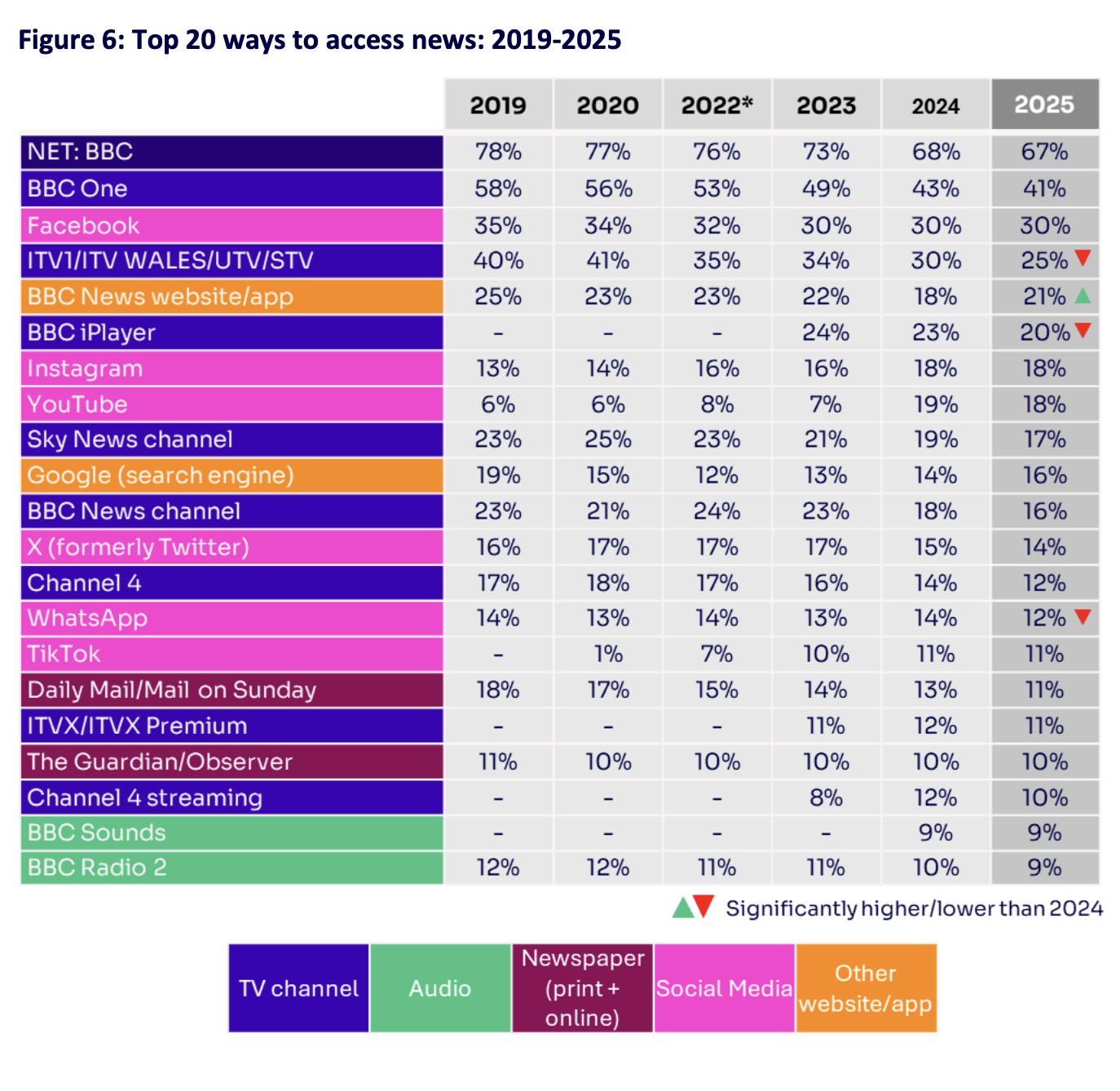
12-15s receive their news: 39% from BBC, 31% from TikTok, 30% YouTube, 24% Instagram
-
16-24s
For young people, online platforms and social media are far more prevalent than more traditional ways for accessing news content with eight in ten 16-24-year-olds using online. Social media services remain the main way to access news with three-quarters of all young people aged 16-24 using these services.
-
-
Interest is lowering in current affairs
News and current affairs as a topic of interest has been decreasing over time, declining from 48% in 2018 to 42% in 2025. However, just 6% of UK adults said they did not follow the news, primarily due to the news being ‘too depressing’ (52% of those not following the news). Three in ten of those not following the news say they find it ‘too boring’ or ‘find it difficult to trust’.
-